Unsubscribe
View in your browser

Medieninformation
for English see below

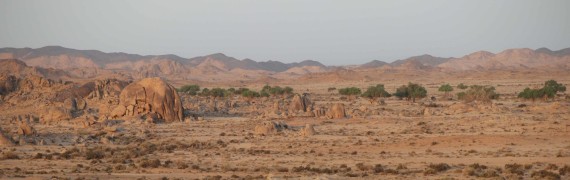
Die Gobi – Landschaften in denen Pflanzen und Tieren enorme Anpassungsleistungen vollbringen, um unter harschen und kargen Bedingungen existieren zu können. The Gobi - landscapes in which plants and animals perform enormous adaptations in order to exist under harsh and barren conditions. © J. Wunderlich/ Michael Succow Foundation

Succow Stiftung beginnt Projekt in der Mongolei zum Schutz der Wüste Gobi

Zusammen mit Partner*innen unterstützt die Naturschutzstiftung die Welterbenominierung der Wüste Gobi

Die mongolischen Wüsten Große und Kleine Gobi sind aufgrund ihrer Ausdehnung, Vielfalt und Unberührtheit weltweit einzigartig. Die Gobi-Gebiete beherbergen eine außergewöhnliche Anzahl von seltenen Pflanzen- und Tierarten – darunter Wildkamele, Wildesel, Przewalski-Pferde, Gobibären, Luchse und Schneeleoparden – sowie eine enorme Bandbreite an intakten Wüstenlandschaften und geologischen Ausprägungen.

Die Regierung der Mongolei hatte die mongolische Gobi bereits 2014 in die Vorschlagsliste der UNESCO-Welterbekonvention aufgenommen. Das Ministerium für Umwelt und Tourismus der Mongolei bat Deutschland nun um Unterstützung bei der Ausarbeitung eines anspruchsvollen Nominierungsdossiers für die UNESCO, für welches die Succow Stiftung mit ihrer langjährigen Expertise zur Verfügung steht und unterstützt.

Im Laufe des Projekts werden die einzigartigen Ökosysteme mit ihren Reichtümern, Besonderheiten und Arten kartiert und aufgelistet sowie die entscheidenden Bedrohungen für das Ökosystem und die Arten der vorzuschlagenden Welterbestätte analysiert. Ziel ist es, bestehende und zukünftige Bedrohungen, beispielsweise durch Bergbau und Transportwesen, zu verringern.

„Eine erfolgreiche Welterbenominierung der Wüste Gobi wird Entscheidungsträger*innen vor Ort ermutigen, in den Schutz der Landschaft zu investieren und deren Management weiter zu verbessern. Außerdem kann es die Verfügbarkeit von zusätzlichen internationalen Mitteln zur Stärkung des Schutzgebietssystems fördern“, so Jens Wunderlich, Arbeitsgruppenleiter für Schutzgebiete bei der Succow Stiftung. 

Die Deutsche Stiftung Welterbe unterstützt das Projekt durch einen Kofinanzierungsanteil. Gegründet von den Hansestädten Stralsund und Wismar, unterstützt sie gefährdete Welterbestätten außerhalb Deutschlands und trägt so zur Ausgewogenheit der Welterbeliste bei.

Thomas Beyer Vorstandsvorsitzender der Deutschen Stiftung Welterbe: „Es gibt nur wenige Orte auf dieser Welt, die eine so beeindruckende Landschaft und eine so einzigartige Natur aufweisen, wie die Wüste Gobi. Es ist wichtig, dieses Ökosystem zu erhalten und wir unterstützen den Antrag daher sehr gern.“

Das Projektteam wird Wissenschaftler*innen, Nichtregierungsorganisationen und die Zivilgesellschaft miteinbeziehen, um mit Hilfe ihres Engagements eine umfangreiche und langzeitliche Daten- und Wissensbasis über Arten und Ökosysteme der Gobi zu erschließen. So kooperiert die Succow Stiftung bei der Erarbeitung des Dossiers mit renommierten Organisationen wie der International Takhi Group Mongolia (ITG), dem Mongolian Bird Conservation Center (MBCC) und der Inland Norway University of Applied Sciences, Department of Forestry and Wildlife Management (INN).

Das Projekt wird aus Mitteln des Beratungshilfeprogramms (BHP) in den Ländern Mittel- und Osteuropas, des Kaukasus und Zentralasiens sowie in anderen Nachbarländern der Europäischen Union gefördert. Es wird vom Bundesamt für Naturschutz (BfN) und dem Umweltbundesamt (UBA) betreut.

zur Projektwebseite


Succow Foundation starts project in Mongolia to protect the Gobi Desert

Together with partners, the Nature Conservation Foundation supports the World Heritage nomination of Gobi Desert 

The Mongolian Gobi Desert is unique in the world for its extent, diversity and pristine nature. The Great and Small Gobi are home to an extraordinary number of rare plant and animal species - including wild camels, asiatic wild asses, Przewalski's horses, gobi bears, lynxes and snow leopards - as well as an enormous range of intact desert landscapes and geological features.

Mongolia's government had already included the Mongolian Gobi in the UNESCO World Heritage Convention's Tentative List in 2014. The Ministry of Environment and Tourism of Mongolia now asked for support in preparing a challenging nomination dossier for UNESCO, for which the Succow Foundation is available and supporting with its many years of expertise.

In the course of the project, the critical threats to the ecosystem and species of the World Heritage Site to be nominated are now being analysed. The goal is to use this process to mitigate existing and future threats, for example from mining and transportation.

"Successful World Heritage nomination of these deserts will encourage local decision makers to invest in the protection of these landscapes and ecosystems and further improve their management. It can also support the availability of additional international funding to strengthen the protected areas system," said Jens Wunderlich, Head of Department Protected Areas & Biosphere in the Succow Foundation.

The Deutsche Stiftung Welterbe supports the project through a co-financing share. Founded by the Hanseatic cities of Stralsund and Wismar, it supports endangered World Heritage sites outside Germany and thus contributes to the balance of the World Heritage List.

Thomas Beyer Chairman of the Board of the Deutsche Stiftung Welterbe: "There are few places in this world with such an impressive landscape and such a unique natural environment as the Gobi Desert. It is important to preserve this ecosystem and we are therefore very happy to support the application." 

The project team intends to involve a large range of scientists, NGOs and civil society to encourage commitment and to excavate the huge and long-term data- and knowledgebase on species and ecosystems of the Gobi. Therefore, the Succow Foundation involved several renowned organisations into the project team, namely the International Takhi Group Mongolia (ITG), Mongolian Bird Conservation Center (MBCC) and the Inland Norway University of Applied Sciences, Department of Forestry and Wildlife Management (INN).

This project is funded by the German Federal Environment Ministry’s Advisory Assistance Programme (AAP) for environmental protection in the countries of Central and Eastern Europe, the Caucasus and Central Asia and other countries neighboring the European Union. It is supervised by the Federal Agency for Nature Conservation (BfN) and the German Environment Agency (UBA).

project website

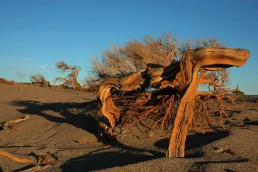
Den Saxaulbäumen sieht man die rauen Umweltbedingungen in der Gobi an. Sie sind wichtige Pflanzen gegen Degradation, für vielfältige Struktur und Artenvielfalt und binden zudem große Mengen Kohlenstoff, vor allem durch ihr ausgeprägtes, tiefgreifendes Wurzelsystem, welches einem unterirdischen Wald gleicht.

The saxaul trees can see the harsh environmental conditions in the Gobi. They are important plants against degradation, for diverse structure and biodiversity, and also sequester large amounts of carbon, mainly through their distinctive, deep root system, which resembles an underground forest.

© Dr. P. Kaczensky

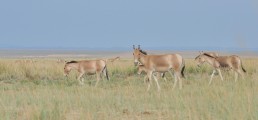
Knapp 80 % der Wildpopulation der Asiatischen Wildesel kommen in der Gobi vor.

Nearly 80% of the wild population of Asiatic wild asses occurs in the Gobi

© Dr. P. Kaczensky

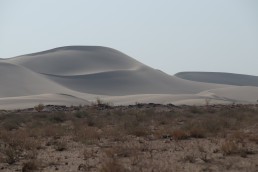
Enorme Vielfalt an Landschaften, Geomorphologie & Erdgeschichte.

Enormous diversity of landscapes, geomorphology & earth history.

© J. Wunderlich/ Michael Succow Foundation

Partner:


Michael Succow Stiftung
Jens Wunderlich
Head of Department Protected Areas & Biosphere
Ellernholzstr. 1/3
D-17489 Greifswald
communication@succow-stiftung.de
www.succow-stiftung.de

Folgen Sie uns auf Twitter, Facebook und YouTube.
Abonnieren Sie unseren Newsletter!
Helfen Sie, Moore und das Klima zu retten. Spenden Sie jetzt

Die Michael Succow Stiftung ist Partner im Greifswald Moor Centrum (GMC) und Biosphere Reserve Institute (BRI).

Sie können den Erhalt der Presseinformation hier abbestellen.